

Everyone wants to lose weight fast. And the fitness industry has spent decades turning that simple desire into a sprawling maze of supplements, celebrity protocols, and transformation promises that mostly fail. The real answer is simpler, and it's backed by solid science: a real calorie deficit, smart training, and the right recovery habits. That's it. This article lays out exactly how each piece works, including the part most people completely ignore, which is what you wear when you train.
Before any tactics, here's the benchmark that anchors everything. The CDC, Mayo Clinic, and NHS all reach the same conclusion: roughly 1 to 2 pounds per week is the safe, sustainable ceiling for most adults. That number isn't a consolation prize. It's a constraint that actually clarifies the goal. Work within it and you lose fat. Push past it recklessly and the results get complicated fast.
At IonicFire, we've spent years at the intersection of performance science and real athletic training, engineering gear for people who take their results seriously. That perspective shapes everything in this article: not theory, not marketing, but what the evidence actually shows works.

What "fast" actually means: the number that changes everything
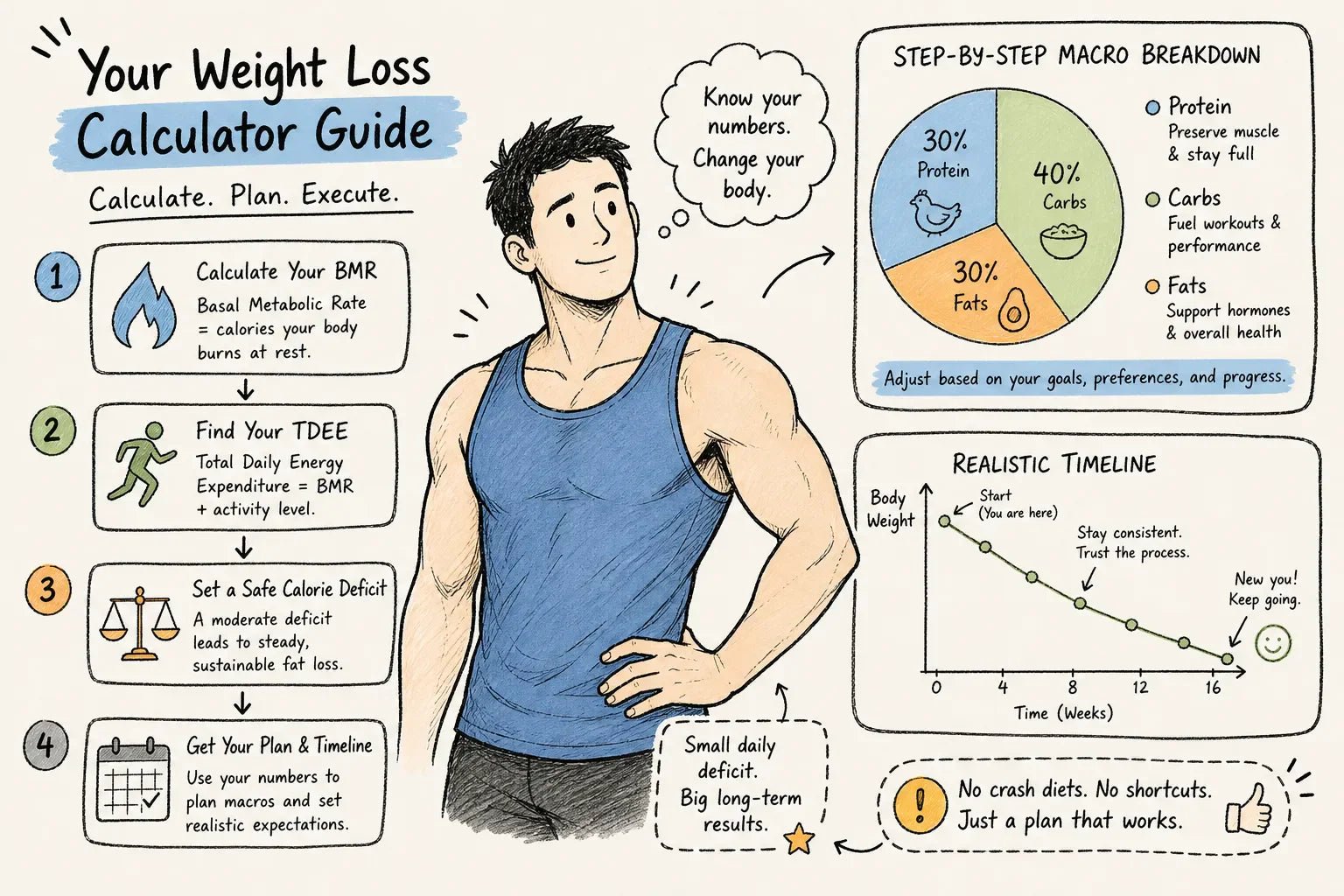
The 1 to 2 lb/week target isn't arbitrary. It reflects a simple mechanical reality. Losing 1 pound of fat requires burning roughly 3,500 calories more than you consume. A 500-calorie daily deficit gets you there in a week. A 1,000-calorie daily deficit gets you to 2 pounds. That's the operating range most healthy adults can sustain without their body starting to work against them.
Going faster than 2 lb/week consistently changes what you're actually losing. The scale drops, but a meaningful share of that drop comes from water weight and lean muscle rather than fat. Water weight returns quickly when you eat normally. Muscle loss is the bigger problem: losing it lowers your resting metabolic rate, making future loss harder and future weight regain easier. The faster you go, the more you pay that tax.
What happens physiologically when the deficit gets too steep is predictable. The body starts cannibalizing muscle for fuel, cortisol rises, and hunger hormones like ghrelin spike. WebMD on rapid weight loss flags losing more than 2 lb/week as the threshold where health risks escalate noticeably. The goal is to stay just under that ceiling, not to treat it as a floor.
Your personal daily calorie target depends on your starting point. Sedentary women typically maintain on 1,800 to 2,400 calories per day; a 500-calorie cut puts intake around 1,300 to 1,900 for 1 lb/week loss. Active men maintaining on 2,800 to 3,200 calories can cut to roughly 2,300 to 2,700 and hit the same rate. The math varies by sex, age, and activity level, but the principle is consistent: subtract 500 for 1 lb/week, subtract 1,000 for 2 lb/week, and don't go below numbers that compromise basic function. If you want a personalized estimate, resources on how many calories per day can help you calculate reasonable targets.
Lose Weight Fast: Diet Moves That Create the Safest Calorie Deficit

Cut Liquid Calories First
The single fastest dietary change most people can make is cutting liquid calories. Sugary drinks, juice, and alcohol deliver calories without triggering satiety the way solid food does, the body simply doesn't register them as a meal. Replacing those beverages with water, unsweetened coffee, or zero-calorie drinks can substantially reduce daily intake without producing any hunger, a swap that observational dietary research consistently identifies as one of the most effort-efficient changes a person can make. No other single swap comes close in terms of effort-to-result ratio.
Prioritize Protein at Every Meal
After liquid calories, protein is the most important lever. Lean protein at every meal, fish, poultry, legumes, or low-fat dairy, does three things at once: it preserves muscle mass during a calorie deficit, suppresses hunger hormones, and burns more calories during digestion than carbohydrates or fat do. A 2020 meta-analysis in Nutrition Reviews supports 1.2 to 1.6 grams of protein per kilogram of body weight per day as the effective range for muscle preservation during active dieting. You don't need to count every gram, but a protein source at each meal is non-negotiable if you want to lose fat and keep muscle.
Volume and Veggies
Pair protein with volume. Building half your plate with non-starchy vegetables, broccoli, spinach, peppers, cucumber, means eating a large amount of food for very few calories. The fullness is real, the calorie count is low, and adherence becomes manageable rather than miserable.
Portion control and meal timing do work, but not for magical reasons. Smaller plates, pre-portioned meals, and stopping food intake earlier in the evening reduce total intake automatically. Intermittent fasting follows the same logic: the evidence consistently shows it works when it helps people eat fewer calories overall, not because meal timing has a special metabolic effect. If an eating window helps you stay in your deficit, use it. If it doesn't help, skip it.
Training to Lose Weight Fast: Methods That Push Fat Loss Further

Diet creates the deficit. Training accelerates fat metabolism, protects muscle mass, and improves body composition even at the same rate of scale loss. Both levers matter, and combining them produces better results than either alone.
Cardio Intensity and HIIT
On the cardio side, intensity determines impact. Higher-intensity cardio, HIIT, tempo runs, cycling intervals, burns more calories per unit of time and elevates post-exercise oxygen consumption (EPOC), extending calorie burning for hours after the session ends. A widely cited RCT protocol uses 3 HIIT sessions per week, with work intervals under 60 seconds and active recovery under 90 seconds; this structure consistently produces strong body-composition outcomes across multiple studies. See HIIT research for examples and protocols. Steady-state cardio works too, but HIIT is more time-efficient for people specifically trying to accelerate fat loss.
Strength Training
Strength training gets overlooked in the fast weight loss conversation, and that's a mistake. Maintaining or building muscle mass keeps resting metabolic rate higher during a calorie deficit. Even 2 to 3 sessions per week alongside cardio produces measurably better body-composition outcomes than cardio alone. The common instinct to just do more cardio often leads to muscle loss, a slower metabolism, and a plateau that feels impossible to break through.
Recovery is where the adaptation from training actually happens. Without adequate rest, the body can't repair muscle tissue and cortisol stays chronically elevated, which promotes fat retention rather than fat loss. Rest days are not wasted days. They are the mechanism. How well you recover between sessions depends on sleep, nutrition, stress management, and the physical environment your body operates in during training itself.
Why what you wear during training actually matters
Core body temperature regulation is directly tied to how hard you can push and how long you can sustain it, exercise physiology research confirms that rising core temperature is a primary limiter of both workout intensity and duration under heat stress. When a fabric efficiently moves heat away from the skin's surface and manages moisture, the cardiovascular system isn't forced to divert as much effort toward cooling. That likely means more capacity available for work output. Inefficient fabrics trap heat unevenly or leave you saturated in sweat, both of which accelerate fatigue and cut sessions short.
Layering and targeted compression also influence heat transfer and comfort, which can matter as much as the training plan itself.
IonicFire's MILK SILK fabric is engineered with this problem in mind. It's a next-generation regenerated protein fiber that moves heat evenly across the skin's surface and manages sweat more effectively than standard polyester blends. Your body maintains a more stable working temperature, moisture is managed without saturation, and you're less likely to hit the thermal wall that ends effort early. These aren't performance magic tricks, they're the practical result of a fabric designed for thermoregulation rather than aesthetics.

The IonicFire MILK SILK shirt is the specific product built around these properties. It's not a standalone weight-loss solution. It's a training support tool. When you've already dialed in your calorie deficit and your workout structure, gear that supports better thermoregulation and moisture management means greater comfort through each session, and greater comfort tends to mean better adherence and longer sustained effort over weeks. Most gym apparel is designed for aesthetics or basic comfort. Technical fabrics are designed for performance support, and that difference adds up over consistent training. For practical recommendations, see our guide to the best gym clothes for men.
Medical risks of moving too fast and when to bring in a professional
The risks of aggressive weight loss are real and specific. Three show up most consistently in clinical literature.
First, electrolyte disturbances: sodium and potassium shifts from rapid loss and severe restriction can cause heart rhythm irregularities, muscle cramps, and severe fatigue. These aren't minor inconveniences. Significant electrolyte imbalance can be life-threatening.
Second, gallstones: rapid fat metabolism changes bile composition in ways that promote stone formation. Research puts the incidence at 12 to 25 percent in people losing large amounts of weight quickly, with very-low-calorie diets associated with rates at the higher end of that range.
Third, nutrient deficiencies: severely restricted or food-group-eliminating diets strip iron, B12, zinc, calcium, and folate, producing fatigue, hair loss, and immune suppression that compound over weeks.
The symptoms that signal your deficit is too steep are worth knowing before you start. Watch for dizziness, heart palpitations, severe fatigue, muscle cramps, persistent constipation, upper-right abdominal pain (a gallstone signal), and abnormal hair loss. Any of these appearing consistently means it's time to reassess and get a medical review. Losing more than 2 lb/week consistently, or losing more than 5 percent of body weight in under a year without intentional effort, also warrants a conversation with a doctor.
Very-low-calorie diets, under 800 calories per day, are a legitimate clinical tool in specific situations, but they belong under medical supervision. Clinical programs and Mayo Clinic guidelines outline when such approaches are appropriate. People with existing heart rhythm issues, kidney disease, gallbladder disease, eating disorder history, or electrolyte disorders should not attempt rapid weight loss programs without a clinician involved. The strategies in this article are designed for healthy adults with no complicating medical conditions. If that description doesn't fit your situation, get medical clearance before you start.
The plan is already in front of you
If you want to lose weight fast, the path comes down to four things: executing a real calorie deficit, training with enough intensity to accelerate fat metabolism and protect muscle, recovering properly between sessions, and using every tool available to make each workout count. None of this is complicated. Most of it just requires consistency over weeks, not days.
One to two pounds per week doesn't sound dramatic. But at 2 lb/week, that's a theoretical maximum of over 100 pounds in a year, though in practice, most people will see loss slow over time as the body adapts, which is exactly why sustainable pace and muscle preservation matter more than chasing the fastest possible number on the scale. The goal isn't a crash. The goal is a pace you can hold without your body breaking down, your hormones going haywire, or your results reversing the moment you eat a normal meal.
The gear layer is the part most fast weight loss strategies overlook entirely. IonicFire's MILK SILK fabric and broader performance line exist because the quality of your training environment directly affects the quality of your output. If you're tracking calories, structuring your workouts, and taking recovery seriously, your gear should be working as hard as you are. The deficit is set. The training plan is outlined. The next step is starting.

Hinterlasse einen Kommentar
Diese Website ist durch hCaptcha geschützt und es gelten die allgemeinen Geschäftsbedingungen und Datenschutzbestimmungen von hCaptcha.